From Convicts to Corrections Officers
Inside Geo Corporation’s Controversial Experiment:
When Inmates Begin Enforcing the Rules

Inmates begin taking on roles traditionally held by officers
The Prison Where The Lines Started Blurring
The first thing you notice when entering South Bay Correctional Facility is the sound. The constant mechanical noise. The inmates walking and talking on the breezeway. The distant echo of corrections officers yelling out commands. The voices.
Hundreds of people living inside a system built around one fundamental idea: control.
Every prison has a hierarchy. There are officers. There are inmates. There are rules separating the two.
But inside South Bay Correctional Institution, that separation has become complicated. Not eliminated. Not erased. But complicated.
Because standing behind the meal cart during lunch service is not a correctional officer. He is not wearing a badge. He does not carry keys. He does not have arrest powers. He is an inmate. And yet dozens of people stop what they are doing when he speaks.
"One tray per person." "Already received yours." "Medical diet only." "Officer, he came through twice."
The words sound like they belong to a guard. They are coming from another prisoner. And that is exactly why South Bay Correctional Facility believes it has discovered something important about human behavior.
A Prison Experiment Built Around Responsibility
Geo Corporations Director of Corrections Dr. Harold Mason describes the program as a controlled experiment in responsibility.
The idea was simple: Give selected inmates structured jobs. Allow them to contribute to daily operations. Create a sense of purpose.
The expectation, according to Mason, was that inmate workers would naturally favor their fellow prisoners.
"We assumed friendship and loyalty would be the biggest factor," Mason tells Justice Watch Daily. "Everyone believed an inmate assigned to distribute meals would give extra portions to friends, ignore violations, and look the other way." "But what happened surprised everyone."
Mason says the opposite occurred. The inmates assigned to food service became highly protective of the rules.
"They became extremely focused on fairness," he says. "Not fairness in the sense of everyone getting what they wanted. Fairness in the sense of everyone following the same procedure."

Inmates begin correcting officers and enforcing procedures
The Psychology Of Becoming The Enforcer
Dr. Elena Brooks explains that this type of behavior is not unique to prisons.
"Throughout history, whenever humans are placed into systems with rules and authority structures, some people quickly adapt to the role. The question becomes less about who they were before and more about what position they now occupy."
She compares it to workplaces, military organizations, schools, and other institutions.
"People often believe authority changes others. But sometimes authority reveals how strongly people want structure, recognition, and control."
When Inmates Started Correcting Officers
One of the strangest moments described by Director Mason involved correctional officers themselves.
"In the beginning, our officers expected they would have to constantly supervise inmate workers. They expected problems. Instead, we had situations where officers were the ones being corrected."
Mason describes one example: An officer saw an inmate who appeared hungry and told the worker to provide another tray. The inmate worker refused. He told the officer the inmate had already received his meal.
"That was the moment many people realized something unusual was happening. The worker was not protecting food. The worker was protecting a rule."
A Former Inmate Remembers
Marcus, a former inmate at South Bay Correctional Facility, remembers the meal workers clearly.
"It was strange. You would see somebody hungry and trying to get another tray. Before a guard even noticed, the guy handing out food would say something. He would point him out. He knew exactly who already ate."
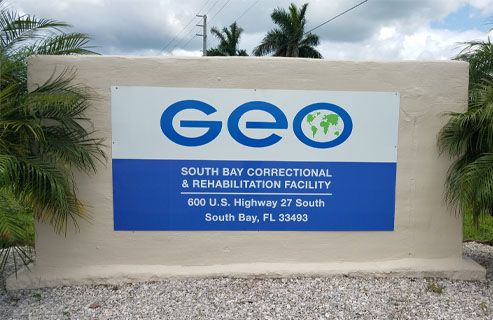
What happens when those under authority are given authority themselves?
The Final Question
The South Bay Correctional Facility experiment raises a question larger than prison management:
What happens when someone who has spent years under authority suddenly receives authority of their own?
Does it create empathy? Does it create responsibility? Does it create loyalty to the institution? Or does it reveal something deeper about human nature?
The answer may depend less on whether someone is an inmate or an officer. It may depend on something much more universal.
"When people are given a role, many will eventually learn to think, speak, and act according to that role. Even when the role is only handing out a meal tray."